SPACE: WHERE ARE WE GOING?


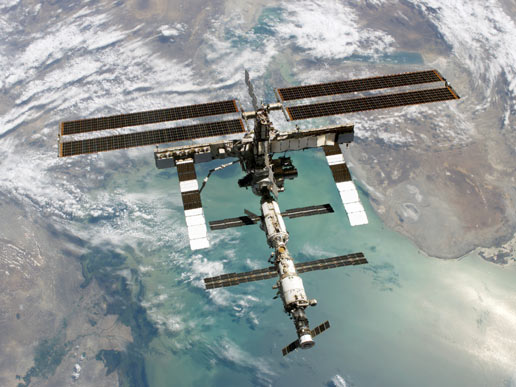
The International Space Station. Credit: NASA

Saturday, April 4, 2015

MISSION UPDATE-K2

http://www.nasa.gov/ames/kepler/mission-manager-update-k2-in-campaign-4/
Posted by Leigh Collin Brandt at 6:39 AM
Email ThisBlogThis!Share to XShare to FacebookShare to Pinterest

No comments:

Post a Comment

Newer Post Older Post Home
Subscribe to: Post Comments (Atom)
Cookie Consent

Translate

MAP OF MOON FROM NASA WEBSITE

MAP OF MOON FROM NASA WEBSITE
Image Credit: NASA/Goddard Space Flight Center/DLR/ASU

A SUPERNOVA FIRST

A SUPERNOVA FIRST
Picture Courtesy of NASA

Blog Archive

  • ►  2016 (78)
    • ►  May (5)
    • ►  April (21)
    • ►  March (19)
    • ►  February (12)
    • ►  January (21)
  • ▼  2015 (327)
    • ►  December (36)
    • ►  November (33)
    • ►  October (14)
    • ►  September (22)
    • ►  August (16)
    • ►  July (22)
    • ►  June (32)
    • ►  May (29)
    • ▼  April (26)
      • Space aids Ebola patients
      • Saturn’s sponge-like moon
      • Ariane 5’s first launch of 2015
      • Our Magnificent Sun
      • Florida
      • Meet Sentinel-2
      • Celestial fireworks celebrate Hubble’s 25th annive...
      • Hubble 25
      • NASA’s NExSS Coalition to Lead Search for Life on ...
      • Light out of darkness
      • Spin service
      • Thor’s neon-hued helmet
      • The Moon
      • Central/southern Italy
      • Asteroid touchdown
      • Alien contact
      • MMS HEADS INTO SPACE
      • Week In Images
      • Space missions taking account of fast-changing che...
      • Sixth SpaceX Commercial Resupply Service Launch Vi...
      • NASA Unboxes Delivery from Space Station
      • Colourful cosmic curtains
      • NASA | CATS Up and Running on the ISS
      • MISSION UPDATE-K2
      • Ethereal ghosts
      • Work begins on ESA's part of planetary defence test
    • ►  March (46)
    • ►  February (28)
    • ►  January (23)
  • ►  2014 (302)
    • ►  December (25)
    • ►  November (32)
    • ►  October (34)
    • ►  September (20)
    • ►  August (18)
    • ►  July (22)
    • ►  June (11)
    • ►  May (23)
    • ►  April (27)
    • ►  March (31)
    • ►  February (35)
    • ►  January (24)
  • ►  2013 (421)
    • ►  December (30)
    • ►  November (35)
    • ►  October (39)
    • ►  September (39)
    • ►  August (34)
    • ►  July (32)
    • ►  June (50)
    • ►  May (40)
    • ►  April (39)
    • ►  March (25)
    • ►  February (31)
    • ►  January (27)
  • ►  2012 (356)
    • ►  December (30)
    • ►  November (37)
    • ►  October (24)
    • ►  September (25)
    • ►  August (30)
    • ►  July (20)
    • ►  June (40)
    • ►  May (43)
    • ►  April (38)
    • ►  March (30)
    • ►  February (21)
    • ►  January (18)
  • ►  2011 (25)
    • ►  December (14)
    • ►  November (6)
    • ►  October (2)
    • ►  August (3)

STAR FLASH

STAR FLASH
What caused this outburst of V838 Mon? For reasons unknown, star V838 Mon's outer surface suddenly greatly expanded with the result that it became the brightest star in the entire Milky Way Galaxy in January 2002. Then, just as suddenly, it faded. A stellar flash like this had never been seen before -- supernovas and novas expel matter out into space. Although the V838 Mon flash appears to expel material into space, what is seen in the above image from the Hubble Space Telescope is actually an outwardly moving light echo of the bright flash. In a light echo, light from the flash is reflected by successively more distant rings in the complex array of ambient interstellar dust that already surrounded the star. V838 Mon lies about 20,000 light years away toward the constellation of the unicorn (Monoceros), while the light echo above spans about six light years in diameter. Image Credit: NASA, ESA

THE SUN'S INNERMOST ATMOSPHERE

THE SUN'S INNERMOST ATMOSPHERE
This combined image from Nov. 8-9, 2012, shows the sun's innermost atmosphere as seen by the Solar Dynamics Observatory (SDO) inside a larger image provided by the Solar and Heliospheric Observatory (SOHO). A coronal mass ejection can be seen traveling away from the sun in the upper right corner. Scientists can compare the images to correlate what's happening close to the sun with what happens further away.

A STAR IS GONE

A STAR IS GONE
Known as G350.1+0.3, this stellar debris field is located some 14,700 light years from the Earth toward the center of the Milky Way. Evidence from Chandra and from ESA's XMM-Newton telescope suggest that a compact object within G350.1+0.3 may be the dense core of the star that exploded.

THE SPIDERWEB GALAXY

THE SPIDERWEB GALAXY
Looking like a spider's web swirled into a spiral, Galaxy IC 342 presents its delicate pattern of dust in this image from NASA's Spitzer Space Telescope. Seen in infrared light, faint starlight gives way to the glowing bright patterns of dust found throughout the galaxy's disk. At a distance of about 10 million light-years, IC 342 is relatively close by galactic standards, however our vantage point places it directly behind the disk of our own Milky Way. The intervening dust makes it difficult to see in visible light, but infrared light penetrates this veil easily. IC 342 belongs to the same group as its even more obscured galactic neighbor, Maffei 2. IC 342 is nearly face-on to our view, giving a clear, top-down view of the structure of its disk. It has a low surface brightness compared to other spirals, indicating a lower density of stars (seen here as a blue haze). Its dust structures show up much more vividly (red). Blue dots are stars closer to us, in our own Milky Way. New stars are forming in the disk at a healthy rate. The very center glows especially brightly in the infrared, highlighting an enormous burst of star formation occurring in this tiny region. To either side of the center, a small bar of dust and gas is helping to fuel this central star formation. Data from Spitzer's infrared array camera are shown in blue (3.6 microns), green (4.5 microns) and red (5.8 and 8.0 microns). Image Credit: NASA/JPL-Caltech

JUMPING TO WARP SPEED

JUMPING TO WARP SPEED
This cockpit view of a hypothetical spacecraft traveling at eight-tenths the speed of light shows the visual distortions that would be experienced at such high speeds. The star field is actually being wrapped toward the front of the craft in addition to being significantly blue-shifted. NASA Glenn leads the Breakthrough Propulsion Physics Project, NASA's primary effort to produce near-term, credible, and measurable progress toward the technology breakthroughs needed to revolutionize space travel and enable interstellar voyages. NASA Lewis (now Glenn) Research Center, Cleveland, Ohio.

DARK MATTER GALAXIES

DARK MATTER GALAXIES
Dark matter, galaxies and hot gas reside at the core of the merging galaxy cluster Abell 520, formed from a violent galaxy collision.

Image Credit: NASA/NOAA/GSFC/Suomi NPP/VIIRS/Norman Kuring

NEW PULSAR DETECTED

NEW PULSAR DETECTED
Photo Courtesy of the NASA Website

HUBBLE TELESCOPE CAPTURES PICTURE OF A SNOW ANGEL

HUBBLE TELESCOPE CAPTURES PICTURE OF A SNOW ANGEL
Picture Courtesy Of NASA

SOUTH POLE OF A SATURN MOON

SOUTH POLE OF A SATURN MOON
Cassini Looks at South Pole of Saturn's Largest Moon

Sen. John Glenn and Kennedy Space Center Director Bob Cabana reminisce inside the flight deck of space shuttle Discovery in the Kennedy Space Center's Orbiter Processing Facility-1. Glenn flew on Discovery as a mission specialist in 1998 and Cabana served as pilot for Discovery during a mission in 1990 and another in 1992. Image Credit: NASA

OBSERVATION FROM THE SPACE STATION

OBSERVATION FROM THE SPACE STATION
This unusual image was photographed through the Cupola on the International Space Station by one of the Expedition 30 crew members. The lake just above the bracket-mounted camera at center is Egirdir Golu in Turkey, located at 38.05 degrees north latitude and 30.89 degrees east longitude. A Russian Soyuz spacecraft is docked to the station at lower right and part of the Permanent Multipurpose Module (PMM) can be seen just above it. The photo was taken on Dec. 29, 2011. Image Credit: NASA

MASSIVE STAR COLLASPE CREATES A BLACKHOLE

MASSIVE STAR COLLASPE CREATES A BLACKHOLE
Picture Courtesy NASA Website

GALACTIC CLOSE ENCOUNTERS

GALACTIC CLOSE ENCOUNTERS
PICTURE COURTESY NASA WEBSITE

NEW COMMUNICATIONS SATELLITE LAUNCHED

NEW COMMUNICATIONS SATELLITE LAUNCHED
Air Force officials launch a United Launch Alliance Delta IV-Medium rocket carrying the fourth Wideband Global SATCOM satellite Jan. 19, 2012 from Cape Canaveral Air Force Station, Fla. Wideband Global SATCOM provides anytime, anywhere communication for the warfighter through broadcast, multicast, and point to point connections. (U.S. Air Force photo/Patrick Corkery)

NASA Image of the Day (Large)

Loading...

Space Shuttle and International Space Station News

Loading...

THE LAST SPACE SHUTTLE

THE LAST SPACE SHUTTLE
Picture From Nasa Website

Earth and Moon as seen by Voyager I

Earth and Moon as seen by Voyager I
Picture From NASA Website

Total Pageviews

Followers

About Me

My photo
Leigh Collin Brandt
I publish and write to entertain and inform.
View my complete profile
Awesome Inc. theme. Powered by Blogger.